Seeing Amen Corner Through a Patron’s Eyes (And Brush)
You can’t talk about the Masters without talking about Amen Corner. The most storied stretch in golf has delivered it’s share of high drama, from epic swings to disastrous collapses. Roars from the corner reverberate across the landscape, a clarion call to patrons and a reminder to the field that this trio can make or break a Masters champion.
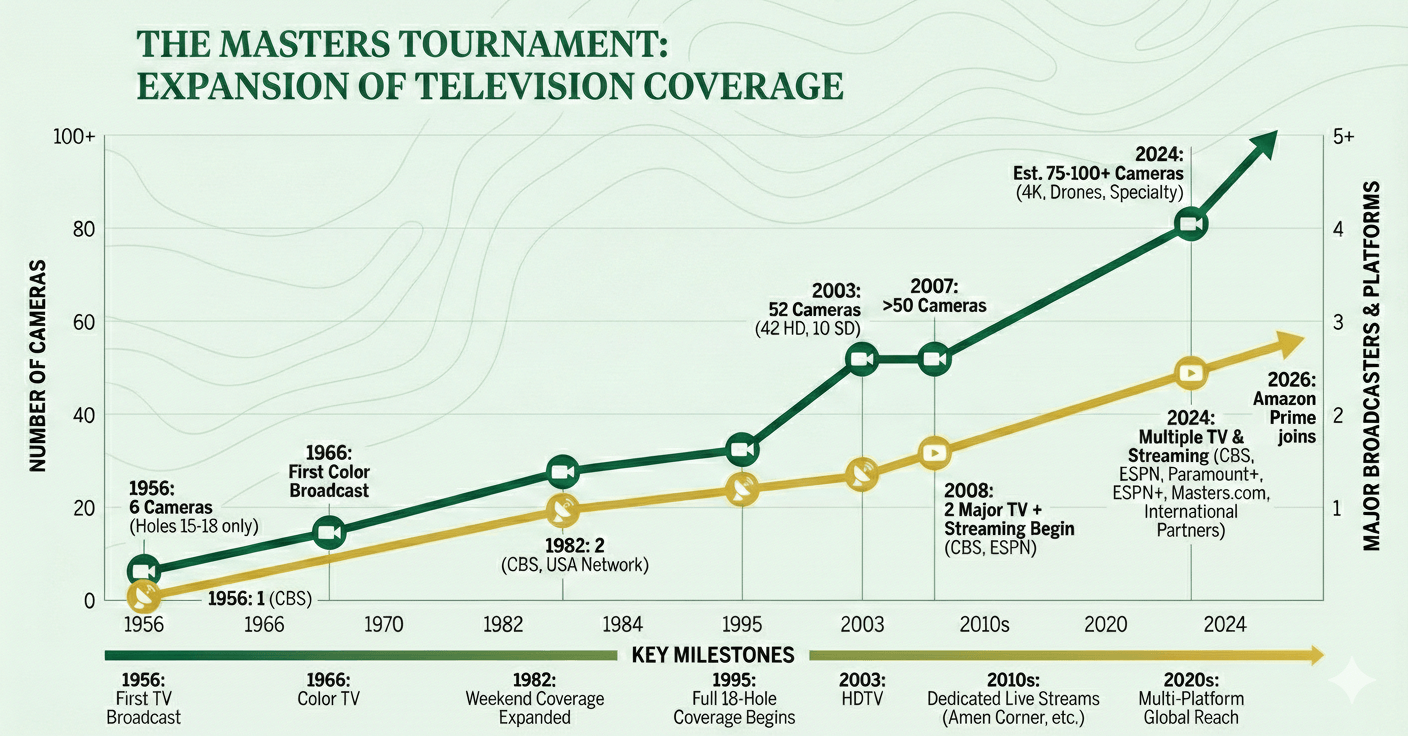
But long before it became shorthand for Sunday drama, it was simply three great golf holes where the best in the game could test their mettle. In fact, those watching from home wouldn’t even catch a glimpse of Amen action until CBS expanded its coverage in 1970 by adding a camera at Hole No. 13 Azalea.
Two years earlier, in 1968, Mack Baltzegar experienced Amen Corner the only way patrons could then: on foot, map in hand, moving at his own pace during a practice round. He took photographs that day not to document history, but to remember what he was seeing. Light through the trees. The slope down toward the creek. The way the holes connected visually, not just competitively.
Years later, those photographs became sketches, and the sketches became watercolor paintings.

Hole 11, 12, and 13 as a Single Landscape
What makes Amen Corner compelling in art is not any one hole on its own. It is how the three holes work together as a continuous environment.
Hole 11, White Dogwood, bends quietly left, guarded more by angle and depth than drama.
Hole 12, Golden Bell, opens suddenly, shorter, brighter, exposed, but protected by the magnetic Rae’s Creek.
Hole 13, Azalea, turns the corner again, climbing away with confidence and space from an elevated tee box.
From a patron’s perspective, these holes feel connected. You do not experience them as isolated moments. You walk into them, around them, and out the other side.
Mack’s watercolor captures that continuity. The paintings do not shout. They invite you to stand where he stood and notice what he noticed. A time capsule of an Augusta of yore, when the course was well known but not quite world famous.
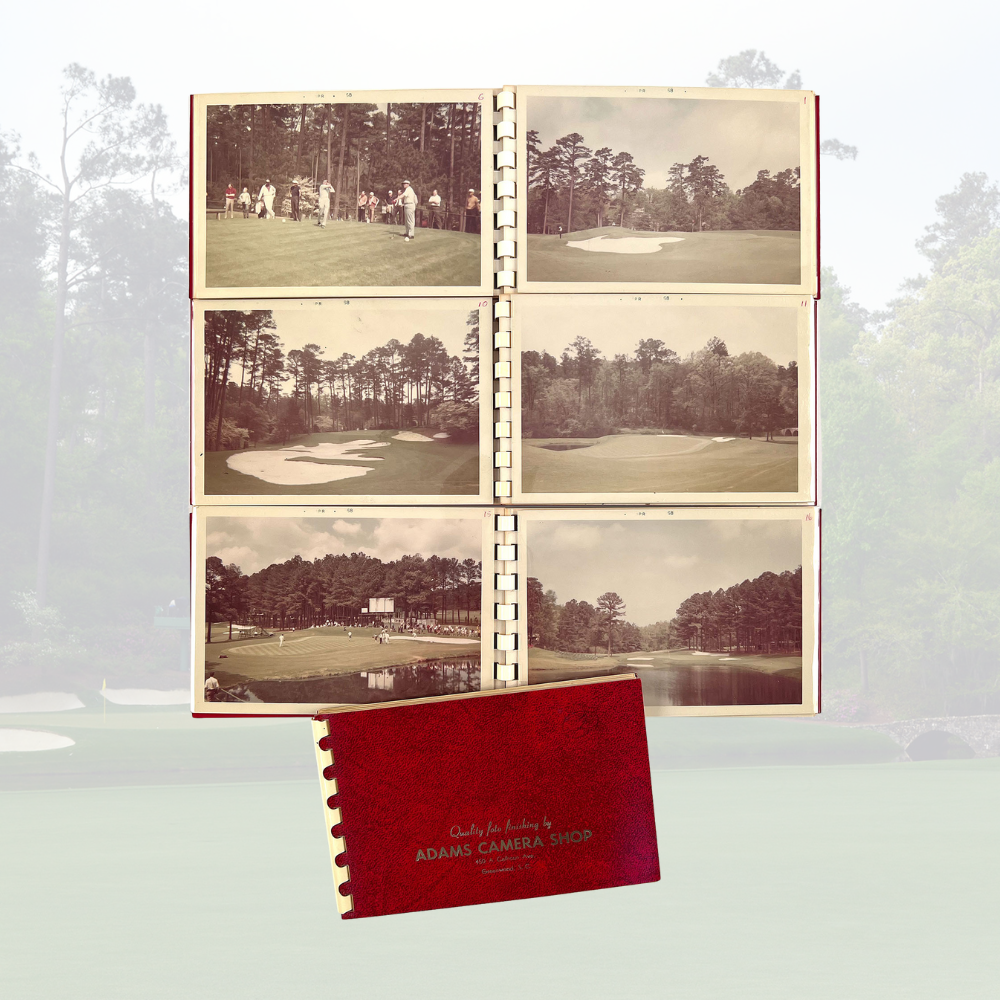
Photos from artist Mack Baltzegar’s trip to Augusta in 1968.
From Photograph to Watercolor
The original photographs were taken for reference, not display. The art came later.
Watercolor allowed Mack to soften edges, compress detail, and emphasize atmosphere. Trees blur slightly. Water reflects more feeling than accuracy. The course becomes less about precision and more about memory.
That restraint is intentional. Amen Corner does not need exaggeration. It holds its weight on its own.
Featured Print: Amen Corner 1968
As individual works, Mack’s art gives us an intimate look at each hole through his eyes. As a combined print, Amen Corner 1968 combines each watercolor to tell an origin story of an emerging springtime ritual. The framed print does not try to recreate a broadcast moment or a famous shot. It works because:
It reads clearly from across a room
It rewards closer inspection up close
It feels calm rather than loud
It reflects an experience many golfers recognize but rarely see depicted
This is the version of Amen Corner you remember walking, not watching.
The Artist Behind the View
Mack Baltzegar did not set out to document golf history.
In 1968, he attended a practice round simply as a patron, moving through the course with a map in his pocket (that he later used to card his own round at Augusta) and a camera in hand. He photographed what caught his eye, not what he thought might matter later. Trees framed by fairways. Light falling across elevation changes. The quiet geometry of the course when competition had not yet taken over.
When Mack later returned to them as a watercolorist, he wasn’t trying to recreate the day exactly. He was translating memory. Watercolor allowed him to soften edges, compress detail, and emphasize atmosphere over precision. What mattered was not the exact position of a bunker or pin, but how the place felt when you stood there.
His paintings reflect that restraint. They do not chase spectacle or famous moments. They linger instead on space, balance, and movement through the landscape. Amen Corner, in particular, became less about individual holes and more about how the ground flows from one to the next.
This is why Mack’s work resonates with people who have walked the course, studied it, or simply understand that golf is experienced between shots as much as during them. The art does not announce itself. It waits for the viewer to slow down.
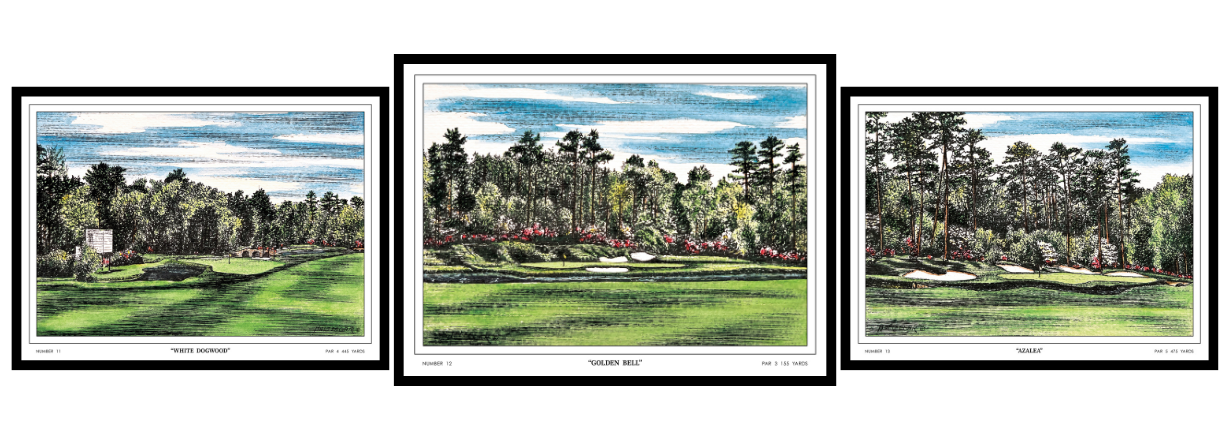
The Amen Corner 1968 poster is available in our Etsy store as a museum-quality print, produced from Mack Baltzegar’s original watercolor and designed to be lived with, not just looked at.
Read More About the Masters